 บีเอ็กซ์แอล
21 Day Cow Pregnancy Diagnosis: Advanced Ultrasound Solutions for Early Cattle Reproduction
21 day cow pregnancy diagnosis is an important topic for dairy farmers, cattle breeders, veterinarians, and livestock reproduction specialists who want to improve reproductive efficiency and make better breeding decisions.
In modern cattle farming, every breeding cycle matters. Identifying pregnancy status as early as reasonably possible can help producers organize follow-up examinations, manage non-pregnant cows, and improve reproductive planning.
Veterinary ultrasound technology has become an essential tool for cattle reproductive management. With appropriate imaging equipment, suitable probes, and experienced operators, veterinarians can examine the reproductive tract, assess ovarian structures, and investigate findings associated with early pregnancy.
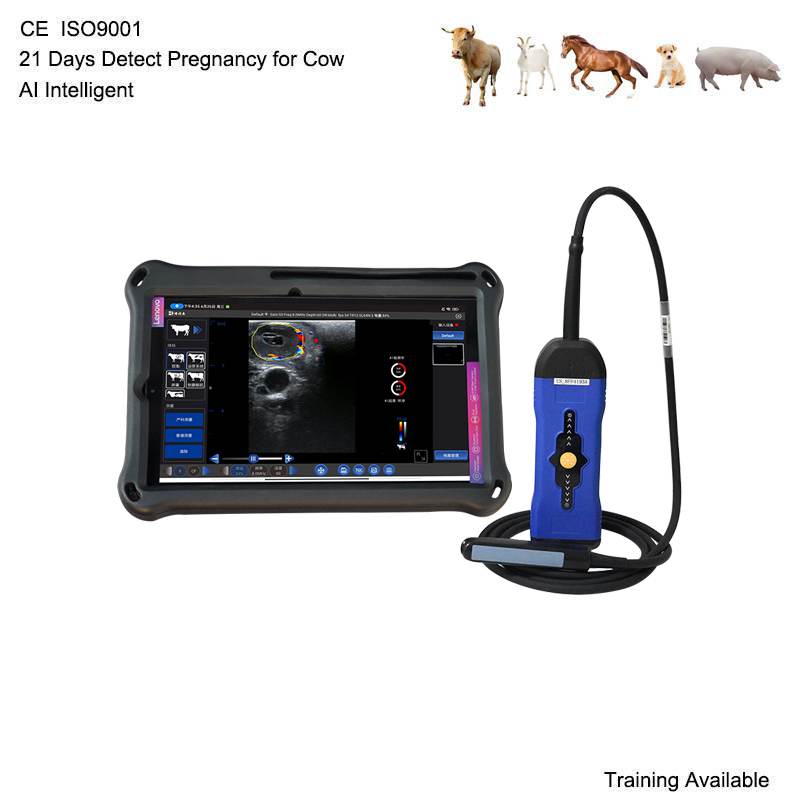
Zhengzhou Boxianglai Electronic Sci-Tech Co., Ltd., the manufacturer of the BOXERLY veterinary ultrasound brand, develops portable veterinary ultrasound scanners, wireless color Doppler systems, and AI-assisted imaging solutions for livestock applications.
This article explains the challenges of diagnosing pregnancy in cows around 21 วันหลังการผสมเทียม, the role of ultrasound technology, and how to select a suitable veterinary ultrasound machine for cattle reproduction.
1. What Is 21 Day Cow Pregnancy Diagnosis?
A 21-day cow pregnancy diagnosis refers to assessing whether a cow has established a pregnancy approximately 21 วันหลังการผสมเทียม.
This timing is particularly interesting because the normal bovine estrous cycle averages approximately 21 วัน. If a cow is not pregnant, she may return to estrus around this time, although individual cycles vary.
Early pregnancy assessment can help veterinarians and farm managers determine which cows require further examination and which animals may need additional reproductive management.
อย่างไรก็ตาม, diagnosing pregnancy at approximately 21 days is challenging and should not be treated as a guaranteed confirmation point for every cow.
At this stage, the embryo and associated uterine structures are small. Diagnostic findings may be subtle, and an inconclusive examination does not necessarily mean that a cow is non-pregnant.
For this reason, veterinarians should select an appropriate diagnostic method, interpret findings in the context of the cow’s reproductive history, and arrange follow-up examinations when necessary.
2. Why Is Early Pregnancy Diagnosis Important in Cattle?
Efficient reproductive management directly affects the productivity of dairy and beef cattle operations.
When pregnancy status remains uncertain, farmers may delay important decisions concerning breeding schedules, veterinary visits, and herd planning.
A well-organized cattle pregnancy diagnosis program can support several important objectives.
Reduce Delays in Reproductive Management
Early assessment helps veterinarians identify cows that require further investigation. When non-pregnancy is established using an appropriate diagnostic protocol, the next breeding opportunity can be planned without unnecessary delay.
Improve Herd Reproductive Efficiency
Accurate insemination records, pregnancy examinations, and follow-up results help farm managers monitor reproductive performance and identify recurring herd-level problems.
Support Dairy Farm Planning
Pregnancy status affects calving schedules, replacement planning, dry-off decisions, and longer-term milk production management.
Improve Veterinary Workflow
Portable cattle ultrasound equipment allows trained professionals to conduct examinations directly on farms, breeding facilities, and livestock production sites.
The objective of early diagnosis is not simply to obtain an earlier answer. It is to generate reliable information that helps farmers make better reproductive decisions.
3. How Can Ultrasound Support 21 Day Cow Pregnancy Diagnosis?
Veterinary ultrasound provides real-time images of internal anatomical structures. In cattle reproduction, ultrasound is commonly used to examine the uterus and ovaries and to diagnose pregnancy at suitable stages of gestation.
For examinations around day 21, the limitations of each imaging method must be understood.
B-Mode Ultrasound for Cattle Pregnancy Diagnosis
B-mode ultrasound produces two-dimensional grayscale images of reproductive structures.
Using an appropriate rectal probe, an experienced veterinarian can examine the uterus and ovaries and evaluate visible findings relevant to reproductive status.
B-mode ultrasound is widely used for cattle pregnancy diagnosis. Nevertheless, an examination around day 21 may not always provide definitive evidence of pregnancy.