 BXL
AI Cattle Pregnancy Scanner: Smarter Ultrasound Technology for Modern Cattle Reproduction
1. What Is an AI Cattle Pregnancy Scanner?
Artificial intelligence is creating new opportunities in modern livestock reproduction. An AI cattle pregnancy scanner combines veterinary ultrasound imaging with intelligent image analysis technologies to support veterinarians in examining the reproductive system of cows.
Traditional cattle pregnancy ultrasound relies heavily on the operator’s experience in identifying uterine structures, embryonic development, ovarian conditions, and other pregnancy-related signs.
With AI-assisted ultrasound technology, image recognition and data analysis algorithms can potentially help identify important anatomical structures, highlight relevant imaging features, and provide additional support during pregnancy examinations.
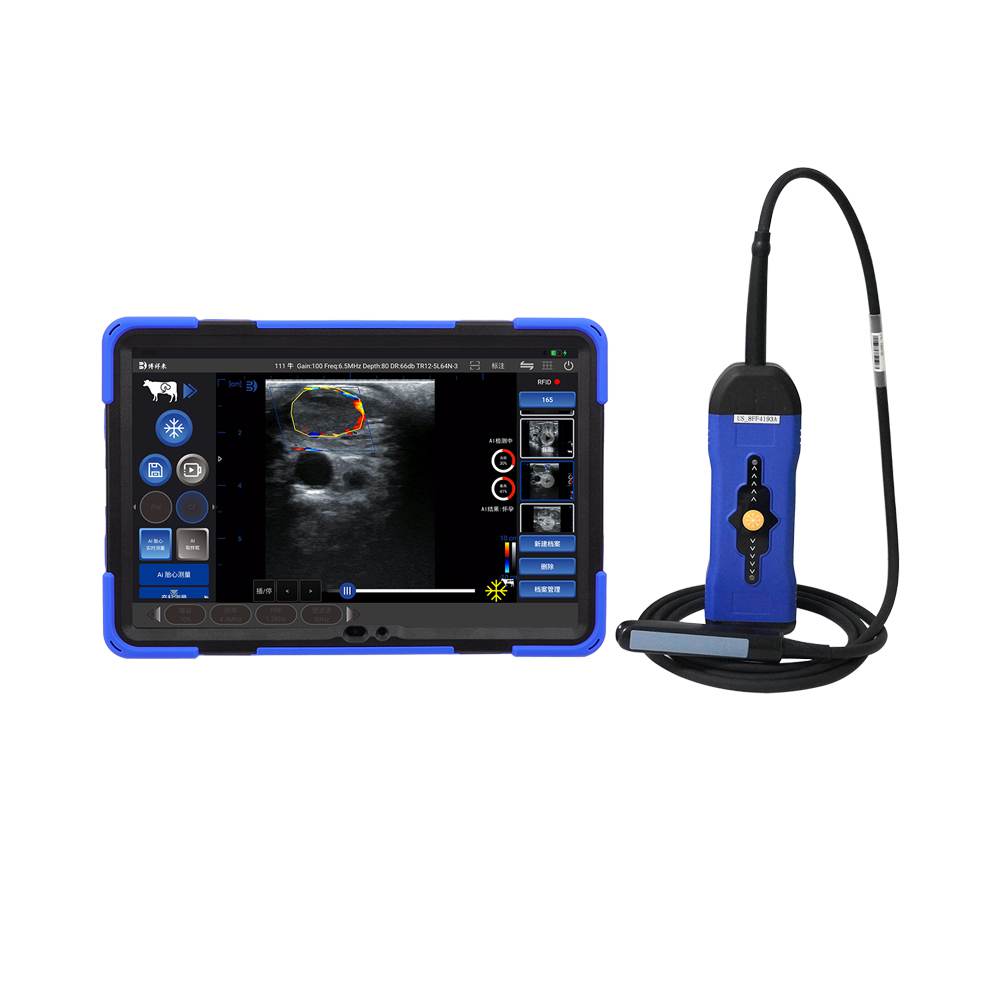
For dairy farms, beef cattle operations, veterinary clinics, and artificial insemination centers, intelligent ultrasound technology offers an opportunity to improve examination efficiency and standardize reproductive management workflows.
A modern AI veterinary ultrasound system may combine several technologies:
High-resolution B-mode ultrasound imaging.
Color Doppler and Power Doppler blood-flow assessment.
AI-assisted image recognition.
Automated image measurement and analysis.
Reproductive examination software.
Wireless image transmission and data management.
The goal is not to replace professional veterinarians. Instead, AI technology can serve as an additional diagnostic support tool, helping veterinary professionals interpret ultrasound images and make more informed reproductive management decisions.
2. How Does AI Pregnancy Detection Work in Cattle?
AI-powered cattle pregnancy detection generally involves collecting ultrasound images or video sequences and processing them through trained computer vision algorithms.
Depending on the system design, the process may include several stages.
Step 1: Ultrasound Image Acquisition
A veterinarian uses a professional cattle ultrasound scanner equipped with a suitable rectal probe to examine the reproductive tract.
The device collects real-time images of the uterus, Ovários, corpus luteum, and other relevant structures.
Image quality is important because AI algorithms depend on clear and consistent input data.
Step 2: Intelligent Image Recognition
Computer vision and deep learning algorithms can be trained to recognize specific structures in veterinary ultrasound images.
Potential applications include:
Identifying fluid-filled uterine regions.
Recognizing embryonic structures.
Detecting relevant ovarian features.
Segmenting anatomical structures.
Identifying image artifacts.
Measuring selected reproductive structures.
These capabilities depend on the training dataset, algorithm design, and validation of the specific AI system.
Step 3: Doppler Blood-Flow Analysis
Color Doppler ultrasound provides information about blood circulation in reproductive tissues.
In cattle, the corpus luteum is an important structure for reproductive assessment.
Changes in luteal blood flow after artificial insemination may provide useful information for early pregnancy prediction.
AI algorithms can analyze Color Doppler images or video frames to identify blood-flow patterns and support pregnancy classification.
Step 4: AI-Assisted Interpretation
After image processing, an AI system may provide visual annotations, measurements, or a pregnancy-related classification.
The veterinarian can combine this information with the animal’s breeding history, examination findings, and clinical knowledge.
This approach may help improve workflow consistency and reduce subjective variation between examinations.
3. Can AI Detect Cattle Pregnancy Earlier Than Traditional Ultrasound?
Early pregnancy detection is one of the most interesting applications of artificial intelligence in bovine reproductive management.
Conventional B-mode ultrasound is commonly used for pregnancy diagnosis around 28–35 days after artificial insemination.
Contudo, research has explored the use of AI and Color Doppler ultrasound to predict pregnancy status at earlier stages.
Um 2025 study published in the Journal of Animal Science investigated deep learning algorithms for analyzing luteal Color Doppler ultrasound images in beef cows.
The researchers evaluated ultrasound recordings collected on days 20 e 22 after fixed-time artificial insemination. Their AI models achieved performance comparable to trained human evaluators under the study conditions, with the best reported classification accuracy reaching approximately 91% on day 22.
This research demonstrates the potential of combining AI with veterinary Color Doppler ultrasound for earlier pregnancy assessment.
Importantly, the study evaluated pregnancy prediction based on corpus luteum blood-flow patterns, not direct visualization of the embryo at day 20.