 BXL
Early Pregnancy Detection in Cattle: How Advanced Veterinary Ultrasound Improves Reproductive Management
Early pregnancy detection in cattle is one of the most important factors in modern dairy and beef cattle reproductive management. Identifying pregnant and non-pregnant cows at an early stage allows farmers, veterinarians, and breeding specialists to make timely decisions, improve reproductive efficiency, reduce unnecessary waiting periods, and increase overall herd productivity.
Traditional pregnancy diagnosis methods have limitations, particularly when early detection and accurate reproductive assessment are required. Veterinary ultrasound technology offers a more informative approach by allowing operators to examine the uterus, Ovaires, corpus luteum (CL), and developing embryo in real time.
With continuous improvements in imaging technology, modern veterinary ultrasound scanners are becoming essential equipment for cattle farms, artificial insemination centers, veterinary clinics, and livestock breeding facilities.
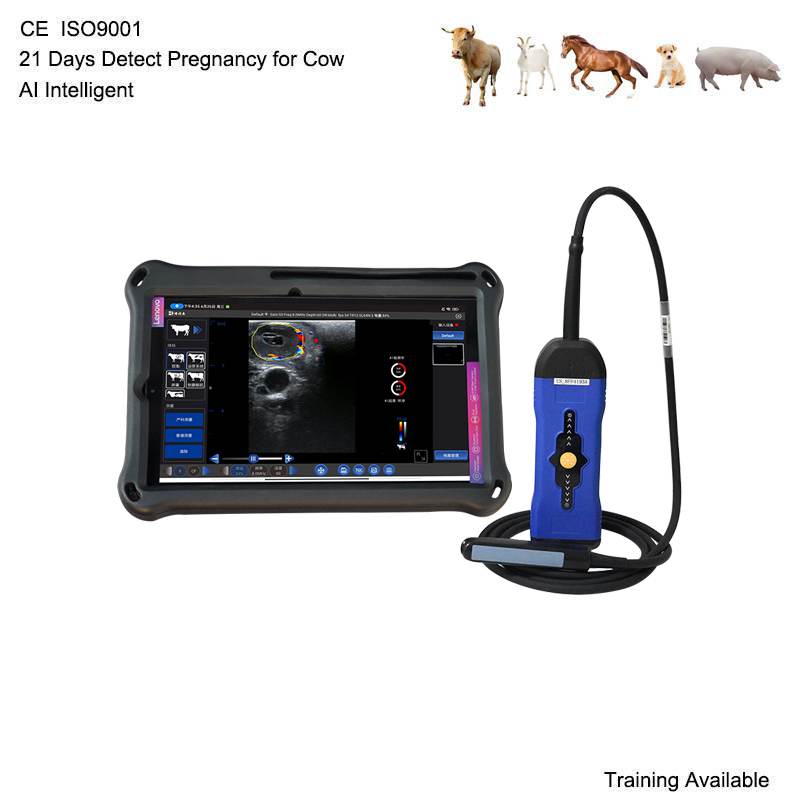
As a professional veterinary ultrasound manufacturer, Zhengzhou Boxianglai Electronic Sci-Tech Co., Ltée. develops and manufactures BOXERLY veterinary ultrasound systems designed to support practical reproductive examinations and livestock management worldwide.
1. Why Is Early Pregnancy Detection Important in Cattle?
In commercial cattle production, every missed breeding opportunity can affect farm profitability.
When a cow fails to become pregnant after artificial insemination or natural mating, delayed identification may result in extended calving intervals, additional breeding costs, and reduced reproductive performance.
Early pregnancy diagnosis helps cattle producers:
Identify pregnant cows as early as practical.
Recognize non-pregnant cows for timely reproductive management.
Reduce unnecessary delays before the next breeding cycle.
Monitor ovarian and uterine conditions.
Evaluate embryo development during follow-up examinations.
Improve breeding efficiency in dairy and beef cattle herds.
For large-scale cattle farms, having a reliable cattle pregnancy ultrasound scanner can significantly improve the efficiency of routine reproductive examinations.
2. When Can Pregnancy Be Detected in Cows Using Ultrasound?
One of the most frequently asked questions by cattle farmers and veterinarians is: How early can you detect pregnancy in a cow?
The answer depends on the ultrasound equipment, probe frequency, examination conditions, operator experience, and diagnostic criteria.
Different stages of early pregnancy provide different ultrasound findings.
Around 20–21 Days After Insemination: Early Reproductive Assessment
At approximately 20–21 days after insemination, conventional ultrasound confirmation of pregnancy is challenging.
Toutefois, advanced Color Doppler ultrasound technology can be used to assess blood flow within the corpus luteum (CL).
Changes in corpus luteum blood flow may provide useful information about ovarian function and reproductive status. This approach can support early non-pregnancy assessment, but it should not be interpreted as definitive confirmation of pregnancy.
For farms interested in early pregnancy management, Doppler imaging offers an additional diagnostic reference.
Around 28–32 Days: Early Pregnancy Diagnosis
At approximately 28–32 days after breeding, transrectal ultrasound becomes a practical method for early pregnancy diagnosis.
Depending on examination conditions and operator experience, ultrasound may help identify:
The gestational sac.
Early embryonic structures.
The location of the pregnancy within the uterus.
Embryonic heartbeat when sufficiently developed and visible.
Uterine and ovarian conditions.
This examination helps veterinarians make more informed decisions about herd reproductive management.
Around 30–35 Days: Embryo and Pregnancy Development Assessment
As pregnancy progresses, the gestational structures become easier to identify.
Veterinarians can examine the pregnancy sac, developing embryo, and embryonic heartbeat, providing additional information about pregnancy status and viability.
For cattle breeding centers and commercial farms, regular ultrasound examinations can help establish a more systematic reproductive monitoring program.
3. How Does Color Doppler Ultrasound Help with Early Pregnancy Detection in Cattle?
Conventional B-mode ultrasound provides grayscale images of reproductive structures, allowing veterinarians to examine the uterus, Ovaires, follicles, and developing pregnancy.
Color Doppler ultrasound adds another important diagnostic dimension: blood flow visualization.
The corpus luteum plays an essential role in maintaining early pregnancy through progesterone production. Changes in its vascular activity can provide valuable information about ovarian function.