 บีเอ็กซ์แอล
Advantages and Disadvantages of Veterinary Ultrasound and Palpation in Cows
Pregnancy Diagnosis in Cows
For many years, rectal palpation has been the standard method for detecting pregnancy in cows. This involves using a gloved hand and arm to palpate the cow’s reproductive tract through the rectal wall. Used by thousands of cows over the years, it remains the gold standard for pregnancy diagnosis. Experienced veterinarians can diagnose pregnancy as early as 35 days of gestation. Furthermore, experienced veterinarians can provide a wealth of information during pregnancy testing, from nutritional and management practices to information on declining fertility and bull problems. In most cases, veterinarians also provide additional services during the property visit, such as equine dentistry or pregnancy diagnosis, canine vaccinations, and other services.
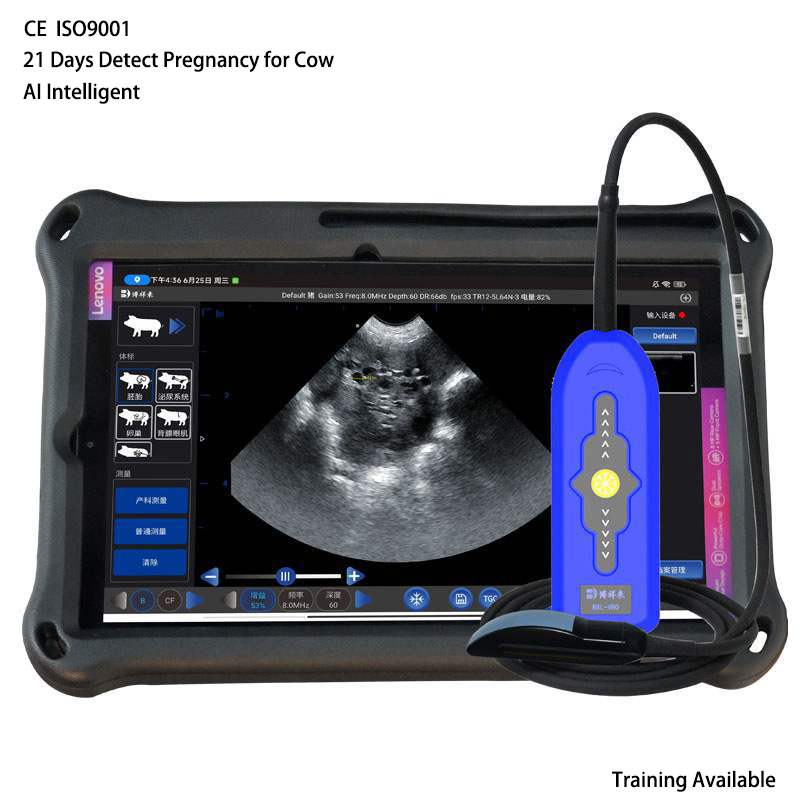
In recent years, veterinary ultrasound has become more commonly used as a method for pregnancy testing. Veterinary ultrasound produces black-and-white images of the uterus and embryo using reflected sound waves. While the uterus can be scanned via the abdomen (external), most pregnancy diagnoses are performed by inserting the veterinary ultrasound probe into the rectum (on the hand or in an extended arm) and examining the uterus through the rectal wall.
Advantages of Veterinary Ultrasound vs. Palpation:
It is a common misconception that veterinary ultrasound is better or more accurate than manual pregnancy testing.
Manual palpation is a proven, safe, and reliable diagnostic system suitable for all cows at all stages of pregnancy. Experienced operators can provide 100% accurate results in determining if a cow is in calf, and early fetal aging can be accurate up to approximately two weeks. Gestational age can now be assessed, although aging becomes less reliable, although this is now typically done later in pregnancy. Manual pregnancy diagnosis requires very little equipment and no power.
A major advantage of veterinary ultrasound is the lower operator fatigue, especially when testing on rotating dairy cows. Speed is often considered an advantage, but testing speed will depend on many factors, including facilities, pregnancy rate, gestational age, and the cow’s fat content. Under suitable conditions, veterinary ultrasound can be much faster than manual testing, but in practice, conditions often mean no difference. In “ideal” animals, veterinary ultrasound requires less skill than manual palpation.
Disadvantages of Veterinary Ultrasound Machines and Palpation Systems
Operator fatigue is the biggest drawback of manual palpation. This is most pronounced in well-equipped facilities with high throughput, as the arm has no time to recover between cattle.
Injuries to the testing arm are also relatively common. These include hyperextension injuries of the elbow joint and the arm hitting the fence. There is also a risk of chronic repetitive strain injuries in the long term. These can be minimized with good technique but will ultimately affect most operators. Acquiring and maintaining tactile skills for manual palpation requires time and a significant number of examinations.
The biggest drawback of veterinary ultrasound machines is their lack of specificity for non-pregnant women. An empty uterus does not contain fluid and is therefore often difficult to observe, especially in obese animals. This leads to another major disadvantage: it is rare to test for pregnancy in a herd of cattle without having to use manual palpation to clarify the condition of individual animals. Some reasons that may require manual pregnancy testing include: the uterus being too deep, too fat, a small uterus hidden next to the bladder, dry feces, air, or poor probe contact due to pelvic shape. These can cause some cows to not be satisfactorily examined by veterinary ultrasound. This can range from 2% of cows examined to 30% or more in some groups.
The variability between cows means that acquiring good veterinary ultrasound skills to assess less-than-ideal animals requires significant training and practice. Fetal aging also requires experience; once the fetus is too deep to visualize, it becomes unreliable. The stage at which this occurs can vary, but it is usually >4 months of pregnancy. If the pregnancy is too deep, manual palpation must be used to determine the stage of pregnancy.
Other disadvantages of veterinary ultrasound machines include equipment cost, maintenance costs, and the fact that some machines require a power source. Heat can also affect some machines, resulting in poor image quality.