 BXL
Why Is Early Pregnancy Detection Important After Artificial Insemination?
Artificial insemination (AI) is widely used in modern dairy and beef cattle production to improve herd genetics, Eficiencia reproductiva, and farm profitability.
Sin embargo, one major challenge for cattle breeders is determining whether a cow has successfully conceived after insemination.
Traditional pregnancy diagnosis methods often require farmers and veterinarians to wait several weeks before confirming pregnancy. This waiting period can delay reproductive management decisions, especially on large dairy farms and commercial cattle operations.
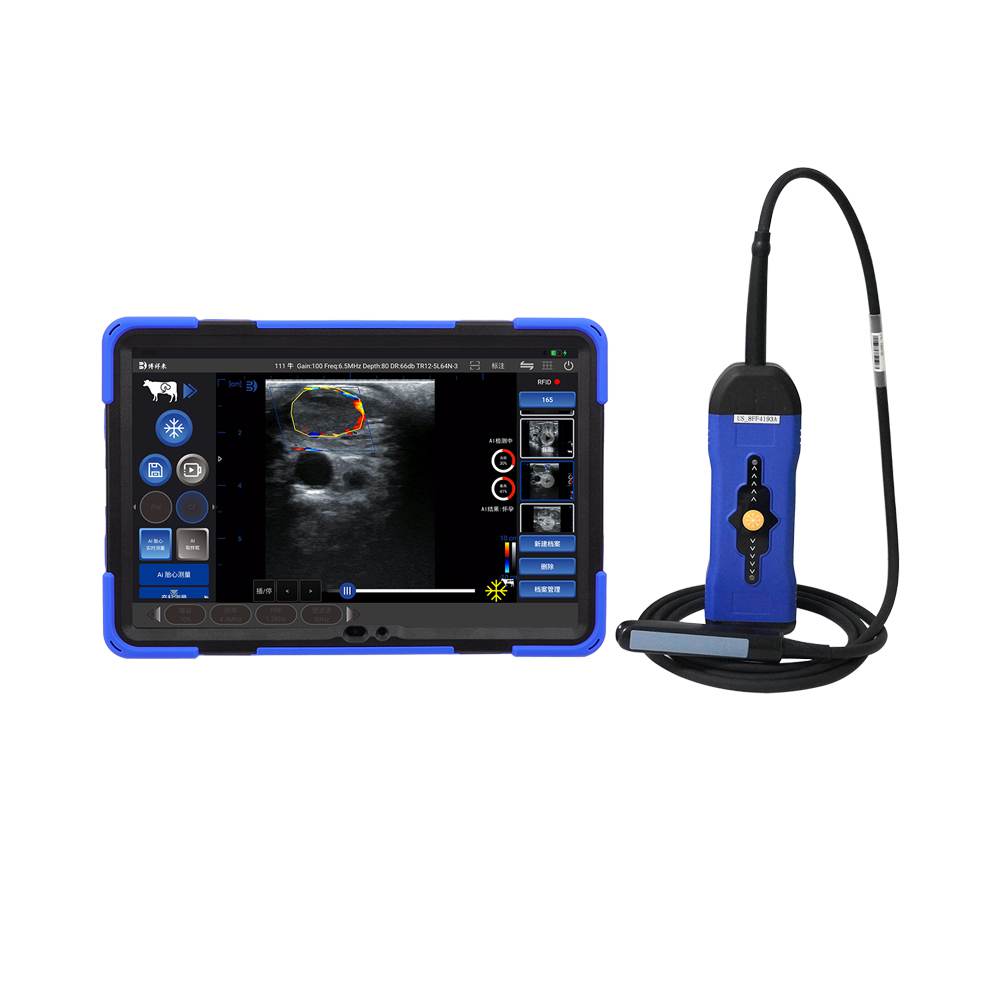
That is why early pregnancy detection in cattle has become increasingly important.
Many veterinarians and cattle producers are interested in using a cattle ultrasound scanner as early as 21 days after AI to monitor reproductive status and identify cows that may require further examination.
Early pregnancy monitoring can help farmers:
– Identify cows that may have failed to conceive.
– Reduce unnecessary waiting time before reproductive reassessment.
– Improve artificial insemination management.
– Monitor ovarian structures and corpus luteum (CL).
– Optimize breeding schedules.
– Improve overall herd reproductive efficiency.
But can an ultrasound machine reliably confirm pregnancy exactly 21 days after AI?
Understanding the biological changes inside the reproductive tract is essential.
2. What Happens in a Cow 21 Days After Artificial Insemination?
After successful fertilization, the developing embryo travels through the reproductive tract and develops within the uterus.
Alrededor 21 days after AI, the embryo is undergoing a critical developmental stage. Maternal recognition of pregnancy occurs during this period, preventing the normal regression of the corpus luteum.
The corpus luteum continues producing progesterone, which is essential for maintaining pregnancy.
En esta etapa, several reproductive indicators can be evaluated by experienced veterinarians.
Important structures and indicators include:
– Corpus luteum (CL): Its presence and characteristics provide information about ovarian activity.
– CL blood flow: Doppler ultrasound can help evaluate vascular perfusion around the corpus luteum.
– Uterine condition: Examination of the uterus may help identify abnormalities or suspicious findings.
– Uterine fluid: Fluid accumulation requires careful interpretation and is not, by itself, proof of pregnancy.
– Embryonic development: A definitive pregnancy diagnosis requires appropriate visualization of pregnancy structures.
It is important to understand that the presence of a corpus luteum does not automatically mean that a cow is pregnant.
Likewise, CL blood flow alone cannot confirm pregnancy.
At approximately 21 days after AI, a negative or uncertain ultrasound finding does not necessarily mean that the cow is open. The examination may simply be too early for reliable confirmation.
For routine B-mode ultrasound pregnancy diagnosis, many veterinarians prefer examining cows from approximately 28–30 days after AI, depending on equipment performance, examination technique, and operator experience.
3. Can Cattle Ultrasound Detect Pregnancy 21 Days After AI?
This is one of the most frequently discussed questions among cattle breeders and veterinary professionals.
The answer depends on the ultrasound technology, examination method, reproductive stage, and operator’s experience.
A conventional B-mode ultrasound scanner can display reproductive structures in real time, allowing veterinarians to examine the ovaries and uterus.
Sin embargo, en 21 days after AI, direct visualization of an embryo is challenging. It should not be presented as a universally reliable pregnancy confirmation method.